Bail Bond Collateral Options Every NC Family Should Understand
Why collateral decisions in Greensboro matter tonight
Families in Greensboro often first hear the word collateral right after a loved one’s bond is set at the Guilford County Detention Center. The officer walks back. The magistrate has signed the bond. The number is higher than expected. Everyone looks around the room to decide what can be pledged, sold, or signed over. That is the moment when a clear explanation saves time and protects assets.
Greensboro cases run through the Guilford County Detention Center at 201 S Edgeworth St, Greensboro, NC 27401. The magistrate’s office inside that complex sets bond conditions at all hours under N.C. Gen. Stat. §15A-534, which lists the release options a judicial official can impose. When the release condition is a secured bond, collateral can become part of the bail bond agreement with a licensed surety bondsman. Collateral is not a fee. It is a safeguard to back the bond if the defendant misses court. Families need to know what counts, what does not, and what puts property at risk.
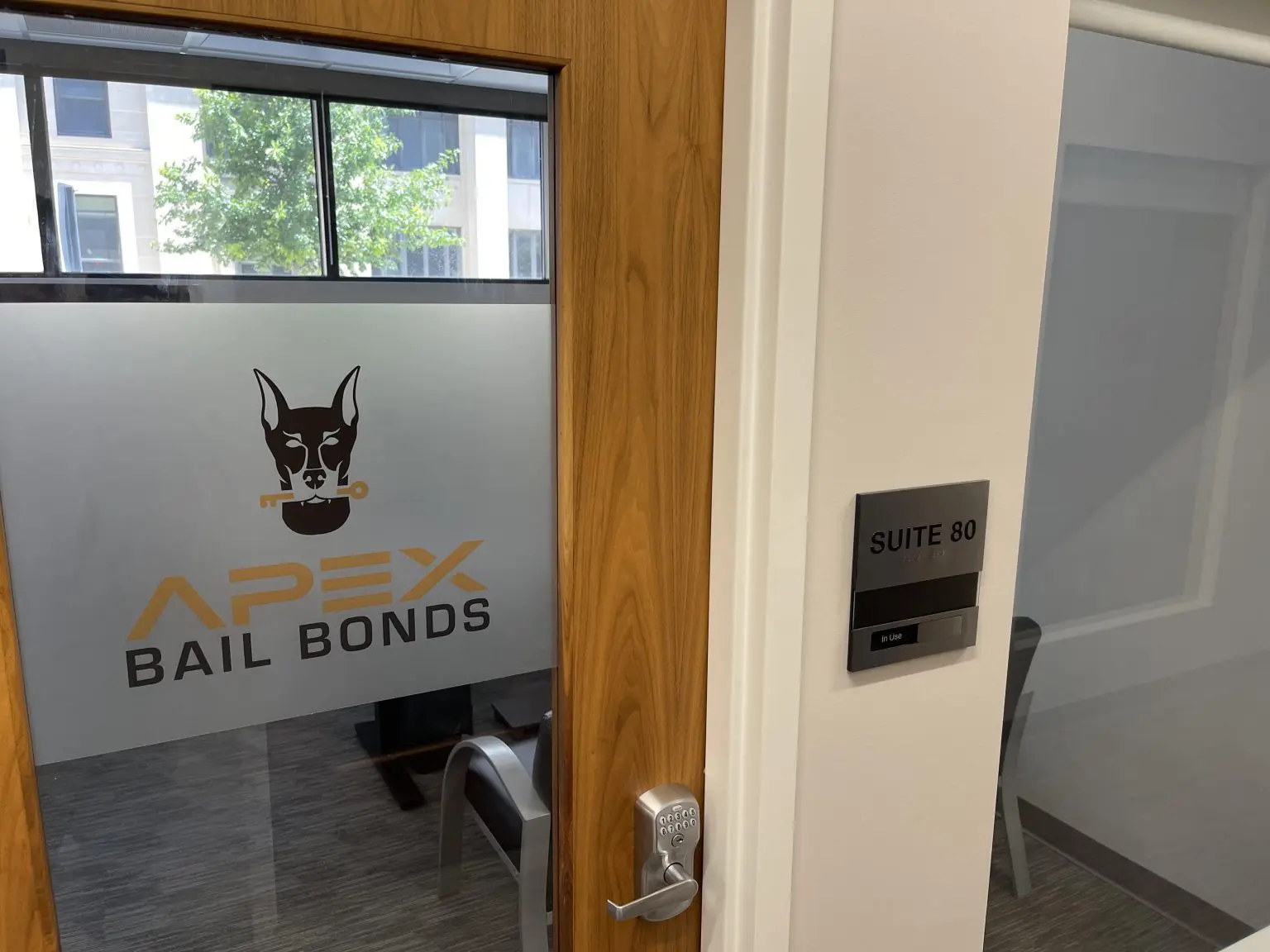
In Guilford County, release after bond posting usually takes 2 to 4 hours, depending on jail volume, shift change, and paperwork flow. Apex Bail Bonds operates one block from the jail at 101 S Elm St, Suite 80. That proximity matters when the bond is time sensitive and a clerk needs a signature in person. The closer the bondsman is to 201 S Edgeworth St, the faster the handoff between the magistrate’s office and the detention staff.
What collateral means under North Carolina law
A secured appearance bond, defined by N.C. Gen. Stat. §15A-531, is a promise to appear in court backed by money or property. If a surety bondsman writes a bond, the family pays a regulated fee known as the premium and may also pledge collateral. The premium in North Carolina is capped by N.C. Gen. Stat. §58-71-95 at 15 percent of the bond amount or $150, whichever is greater. That fee is the bondsman’s charge for taking on the risk and is nonrefundable. Collateral is different. Collateral is a recoverable guarantee. If the case ends and all court dates were kept, collateral is released back to whoever pledged it after any outstanding balance on the premium plan is settled.
When a bondsman takes collateral, he must account for its fair market value and any encumbrances, which means liens or loans already tied to that property. He will document that value in writing. If the collateral is a car, a temporary lien is recorded on the title. If the collateral is a house, a deed of trust is filed with the Guilford County Register of Deeds. For non-titled property, the bondsman may file a UCC financing statement to show a security interest. A UCC statement is a public notice that the property is pledged as security and must be terminated when the bond obligation ends.
The Greensboro financing picture and when collateral is not required
Families searching for bail bond payment plans Greensboro often need a way to cover the state-regulated premium without risking a home or car. North Carolina allows payment plans on that premium. Apex Bail Bonds finances the premium balance at 0 percent interest up to $1 million. Zero financing fees. No hidden costs. On many Greensboro bonds, a strong co-signer can qualify for credit-check-free approval without any collateral at all.
Common payment structures include half down and half later, and a 5 percent down option on bonds $5,000 and up. For example, on a $7,500 bond, the premium under the 15 percent cap is $1,125. Five percent down would be $375 at signing, with the remaining $750 spread across installments without interest. That is why payment plans matter. They help families avoid pawning valuables or using payday loans that can run well over 300 percent APR just to cover a bail premium someone else is willing to finance at 0 percent.
Car titles as collateral on a Greensboro bond
Car title collateral is common because many families have clear title or low balances. If a car secures the bond, the bondsman records a temporary lien. That means the title shows a lender on file until the bond obligation ends. The car stays with the owner and can be driven as normal. The bondsman will ask for the title, vehicle identification number, current registration, and proof of insurance. He will also check for existing liens. If there is an auto loan with a high balance, the equity may be too low to cover the risk. Equity here means the car’s value minus what is still owed on it. The vehicle’s value must reasonably cover the exposure, which is the amount the bondsman could owe the court if the defendant fails to appear and the bond is forfeited.
Car collateral can be a good choice when the bond is mid-range and the co-signer has steady employment. It is less ideal if the car is essential for getting to work and the family cannot tolerate any hold on the title. In that case, the bondsman may suggest a different structure, such as a higher down payment with no collateral or adding a second co-signer who meets the underwriting criteria.
Real estate deeds of trust on homes and land
Real estate collateral works through a deed of trust recorded with the county. In Guilford County, the Register of Deeds accepts filings that become public record and alert any lender or buyer that a security interest exists. Bondsmen prefer 100 percent equity on real estate collateral because foreclosure after a bond forfeiture is time consuming and expensive, and because second or third liens complicate recovery. One hundred percent equity means no mortgage or other liens. In practice, a bondsman may accept property with strong equity if the risk profile fits the case, but higher-risk charges or prior failures to appear often require clean title.
Families should understand the trade-off. A deed of trust stays in the public record until the bondsman files a release. If the case resolves and all court appearances were kept, the release is filed and the lien comes off. If someone tries to sell or refinance while the deed of trust is active, the closing attorney will see that lien and require a release before closing. For many Greensboro homeowners, a deed of trust can unlock a large bond with no cash down beyond the premium plan. It is a powerful option, but it must be used with care.
Cash collateral and the difference between cash bail and surety bail
Cash collateral is sometimes confused with cash bail. They are not the same. Cash bail is when the family posts the full bond amount with the court or jail. That is rare because most families do not have tens of thousands of dollars available. Surety bail is when a licensed bondsman writes a bond for a fee. Cash collateral can be taken by a bondsman as a security deposit, separate from the premium, and held in a trust account. It is refundable when the case closes if the defendant made every court appearance and the premium balance is paid. If someone misses court and the bond is forfeited, the bondsman can apply the cash collateral toward the forfeiture and costs.
Cash collateral is simple and fast. It can also be stressful for families who need that cash for rent, payroll, or medical bills. It usually makes sense on lower bonds when a slight shortfall needs to be covered to avoid other property liens.
Stocks, securities, and investment accounts
Some families hold brokerage accounts, retirement accounts, or fixed income notes. These assets can secure a bond if the account type allows assignment. Not every account can be pledged. Retirement accounts have federal protections that limit assignment. Brokerage accounts are more flexible. The bondsman may work with the account custodian to place a hold or obtain a control agreement. That agreement gives the bondsman the right to liquidate the assets if the bond forfeits. Because this process has more paperwork, it tends to be used on six-figure bonds or when other collateral is not available.
Jewelry, electronics, and personal property
Non-titled personal property, like jewelry, high-end electronics, or tools, can secure a bond, but there are limits. The bondsman must be able to verify authenticity and value. Appraisals help. The bondsman may hold the items or file a UCC financing statement that covers specified personal property. These items can bridge a small gap in value but rarely stand alone on large bonds because resale value after fees and time is uncertain. A good Greensboro bondsman will explain when personal property makes sense and when it would only create false comfort without real coverage.
When Apex approves no collateral bail bonds in Guilford County
No collateral bail bonds are possible on many Greensboro cases if the co-signer is strong. The co-signer, also called an indemnitor, is the person who signs and guarantees the bond. Apex often approves no collateral bail bonds when the co-signer is 25 years or older, has at least 12 months of continuous employment, can verify a permanent residence, and maintains an open checking account. Utility bills and two recent pay stubs help verify address and income. Cases with local roots, stable work history, and clean prior court appearance records are more likely to qualify for a no collateral approval, especially when payment plans are set with automatic installments.
Co-signer responsibilities in plain English
Co-signer liability is the obligation to pay if the defendant misses court and the court rules the bond forfeited. A bond forfeiture is the judge’s order that the bond money is owed to the court because the promise to appear was broken. North Carolina follows a 90-day bond forfeiture timeline in most cases. That means the bondsman and the co-signer have a window to get the defendant back before the full forfeiture is due. If the defendant is returned or the judge sets the forfeiture aside, the collateral is safe and the co-signer is not charged for the bond amount. If the forfeiture stands, collateral can be liquidated to cover the loss. A reliable bondsman will call early if a court date is missed and work to fix it fast.
How Iryna’s Law changes bond risk and collateral decisions
Iryna’s Law, Session Law 2025-93, took effect December 1, 2025. It changed pretrial release decisions for violent offense charges. The law creates a rebuttable presumption against release for certain violent felonies, which means the default assumption is detention unless the defense presents specific facts that overcome that assumption. For a first violent offense, the judicial official must impose either a secured bond or house arrest with electronic monitoring. For a second violent offense, the law steers the court to house arrest with monitoring. Defendants with three or more prior convictions can face secured bonds as a baseline. Written promises to appear were eliminated as a release option under G.S. 15A-534(a) across charge categories. Families in Greensboro will notice this on assault, robbery, and other Class A through G felony charges where judges now make more detailed written findings of fact, which means a written explanation for the chosen release condition.
From a collateral standpoint, violent charges under Iryna’s Law often require stronger co-signers and more secure collateral, especially when the alleged facts involve physical force or weapons. That does not mean a home must always be pledged. It does mean the bondsman will weigh prior failures to appear, out-of-county ties, and the likely sentence if convicted. Those factors change the risk, and risk drives collateral decisions.
Guilford County magistrate and detention center workflow
Bond processing in Greensboro follows a predictable sequence. After booking, the magistrate sets conditions of release. If a secured bond is ordered, a bondsman can post a surety bond with the magistrate on site. The Guilford County Detention Center’s main number is (336) 641-2700. Families can confirm the bond amount or use the county’s inmate search at inmatesearch.guilfordcountync.gov to verify custody status. After the bond is posted, the jail begins release processing. The typical window is 2 to 4 hours, with longer waits at shift change or during peak intake periods.
Proximity matters for timing. Apex is one block from 201 S Edgeworth St. When a clerk calls for a signature or a last-minute document, the bondsman can walk over. That shaves 30 to 60 minutes that an out-of-town bondsman spends driving in. On large bonds, speed comes from familiarity. For example, Apex has a documented track record of posting a $250,000 bond in under 2 hours at the Greensboro facility. Large numbers do not always mean longer waits when the paperwork is clean and the staff knows the bondsman.
Large bonds in Greensboro and how collateral stacks
Six-figure bonds require layered coverage. A bondsman may combine a primary home deed of trust with one or two vehicle titles and a signed indemnity from a second co-signer. If the defendant has strong local employment and a limited record, the bondsman can often lower the collateral requirement and lean on the co-signer’s profile. If the charge is high-risk, like drug trafficking under N.C. Gen. Stat. §90-95(h) with alleged fentanyl involvement, the collateral expectation goes up and real estate becomes more likely. Apex handles large-bond specialty cases up to $1 million and can coordinate collateral across multiple family members to reach the needed coverage.
Payment plans, not payday loans
The premium in North Carolina is capped at 15 percent under N.C. Gen. Stat. §58-71-95. Because that fee is known upfront, an interest-free payment plan is usually a better path than borrowing from a short-term lender. For example, a $10,000 bond carries a $1,500 premium. With a 5 percent down structure, the family pays $500 at signing and finances the remaining $1,000 at 0 percent interest. Over three months, that is $333.33 per month without fees. A payday loan for $1,000 could cost hundreds of dollars in interest and fees over the same time. Greensboro families do not need to stack debt on debt to get someone home. Payment plans can carry the premium without extra cost.
What counts most in Greensboro underwriting
Underwriting is the bondsman’s review of risk. It is not a bank-style credit decision. It focuses on appearance in court and recoverability if something goes wrong. Guilford County cases with stable local ties are usually easier to approve. The strongest signals include 24 months of local residence, proof of a permanent address within 45 miles of the courthouse, a co-signer 25 or older with 12 months of continuous employment, and an open checking account for auto-pay. Homeownership, veteran status, attorney referrals, and returning client history can qualify a case for special low rates or lower down payments.
How collateral is returned when the case ends
When the case concludes and all court dates were kept, collateral release is straightforward. Car title liens are removed by signing a lien release. Real estate deeds of trust are released by filing a satisfaction or release with the Register of Deeds. UCC financing statements are terminated with a public filing. If cash collateral was held in a trust account, it is returned by check or electronic payment after any outstanding premium balance is settled. Families should keep final court paperwork and stay in touch with the bondsman so filings are made without delay.
Missed payments and missed court dates
Families worry about what happens if a payment is late. A missed payment does not automatically trigger an arrest. Communication is the key. Most payment plan agreements have grace periods and allow quick catch-up. If payments stop and the co-signer will not respond, the bond can be revoked, which means the defendant is returned to custody and the bond is surrendered. That is rare with good communication.
A missed court date is more serious. The court may issue an order for arrest and enter a bond forfeiture. The bondsman then has a statutory period, often 90 days, to find the defendant or ask the court to set aside the forfeiture based on a valid reason, like a documented medical emergency. North Carolina law and the Eighth Amendment’s protection against excessive bail require bond conditions to be reasonable. If a bond is set higher than needed to ensure appearance, a defense attorney can file a bond motion to reduce it. Apex can coordinate with counsel on the bond motion timeline, including the 96-hour judge review requirements that apply after certain arrests.
Multi-county and cross-border cases
Greensboro cases can spill into nearby courts. High Point arrests release through the Guilford County High Point Detention Center at 507 East Green Drive, High Point, NC 27260, phone (336) 641-7900. Families with ties to Rockingham County often ask about the Reidsville jail at 170 NC-65, Reidsville, NC 27320, phone (336) 634-3232. Apex handles those bonds daily and can move paperwork between facilities when a defendant is transferred.
Some families also have Virginia connections. Owner Fred Shanks IV holds a Virginia Bail Bondsman License along with two North Carolina licenses. That tri-licensed authority allows direct coordination for Southside Virginia cases without handing the family off to another company. When a Greensboro defendant faces a concurrent Virginia matter, cross-state coordination reduces delays and keeps collateral documents consistent.
Neighborhoods, zip codes, and real local reach
Most Guilford County calls come from Greensboro zip codes 27401, 27403, 27405, 27406, 27407, 27408, 27409, 27410, 27455, and the university corridors around UNCG and North Carolina A&T. Families call from Downtown, College Hill, Fisher Park, Lindley Park, Adams Farm, Glenwood, Irving Park, Hamilton Lakes, Sunset Hills, Westerwood, Starmount, Sedgefield, and along the Battleground Avenue and Gate City Boulevard corridors. Coverage extends to High Point, Jamestown, Summerfield, Oak Ridge, Pleasant Garden, Stokesdale, Colfax, McLeansville, and Gibsonville. Payment plans and collateral options apply across these neighborhoods in the same way because the premium cap and pretrial rules are statewide.
A short list for families under pressure
Every minute feels heavy when someone is sitting at 201 S Edgeworth St. To keep the bond moving, families can gather a few items that speed underwriting and collateral review.
- Valid photo ID and a utility bill for the co-signer’s current address Two recent pay stubs or proof of income for the co-signer Vehicle title, mortgage statement, or appraisal if using collateral Defendant’s full legal name, date of birth, and booking or file number if available Any court paperwork already received, including the charge and bond amount
Plain-English answers to common collateral questions
Can collateral be split between family members? Yes. A bondsman can stack collateral from multiple people to reach the needed coverage. For example, one person pledges a car title and another signs a deed of trust. All parties need to understand and sign the agreements.
What if the property is in two names? Both owners must consent and sign. If one owner is out of town, electronic signatures and notary coordination can keep the process moving, but in-person verification may still be required for real estate filings.
What happens to collateral if charges are dismissed? If the case is dismissed and no hearings were missed, collateral is released after the bondsman receives confirmation from the court and the premium balance is paid off.
Can a co-signer come off the bond later? It depends. The bondsman can agree to remove or replace a co-signer, but only if the remaining coverage and risk are acceptable. Courts do not replace a bondsman’s underwriting judgment with their own. Call early if a change is needed.
Does Iryna’s Law affect non-violent cases? Indirectly. Written promises to appear bail payment plans are no longer allowed as a release option, so more defendants face secured or unsecured bonds. That shift increases the number of families considering payment plans and collateral, even on lower-level charges.
Why this collateral guidance is locally shareable
Two details stand out for Greensboro legal professionals. First, the 0 percent interest premium financing up to $1 million means families are not forced into predatory loans to cover a state-capped fee. That is a real shift in outcomes around 201 S Edgeworth St. Second, the documented posting of a $250,000 bond in under 2 hours at the Guilford County Detention Center shows how proximity to the magistrate and staff familiarity compress processing time in practice. Those two points change how attorneys counsel families on collateral risk versus payment plan structures during the first 24 hours after arrest.
Why Greensboro families choose a bondsman who explains collateral and financing without pressure
A family does not need a lecture when a son, daughter, spouse, or employee is in custody. They need a clear answer on what collateral is truly required, whether a no collateral approval is possible, and how fast the bond can post at 201 S Edgeworth St. They need simple math on the 15 percent premium under N.C. Gen. Stat. §58-71-95 and a straight path to an interest-free plan. They need someone who knows the magistrate flow inside the Guilford County Detention Center and can be at the counter in minutes, not an hour later.
Credentials, location, and how to start the bond now
Apex Bail Bonds is a North Carolina Department of Insurance licensed surety bail bond agency, NCDOI License #18812863. The Greensboro office is at 101 S Elm St, Suite 80, Greensboro, NC 27401, one block from the Guilford County Detention Center at 201 S Edgeworth St. Phone lines are open 24 hours a day, 7 days a week, including weekends and holidays at (336) 609-1190 for Greensboro and (336) 394-8890 for the broader Triad and cross-border coverage. Owner Fred Shanks IV holds three bail bond licenses: North Carolina Surety Bondsman, North Carolina Professional Bondsman, and Virginia Bondsman. That tri-licensed authority supports cross-state coordination when a defendant has ties to Southside Virginia.
For families searching for bail bond payment plans Greensboro, Apex structures premium financing at 0 percent interest up to $1 million, with half-down-half-later options and a 5 percent down choice on bonds $5,000 and up for qualified co-signers. Special rates are available for homeowners, veterans, attorney referrals, and returning clients. No hidden fees and no financing charges. Same-day underwriting is common. On many cases, no collateral is required when a strong co-signer qualifies. Call now to confirm the bond amount, review collateral options, and start the paperwork. Every minute matters when release is 2 to 4 hours away after posting.
- Greensboro line: (336) 609-1190 Triad and NC-VA line: (336) 394-8890 Website: https://www.apexbailbond.com/greensboro-nc NCDOI License: #18812863 Availability: 24/7/365